
[07/08] EVIDENCE CLUSTER · RATE

Low‑energy fusion yield plateau(UC Davis / Berkeley, Thunderbird 2025)

The 2026 plateau result and its thermal-track rival: the exact disagreement our mechanically driven suspension is built to discriminate.

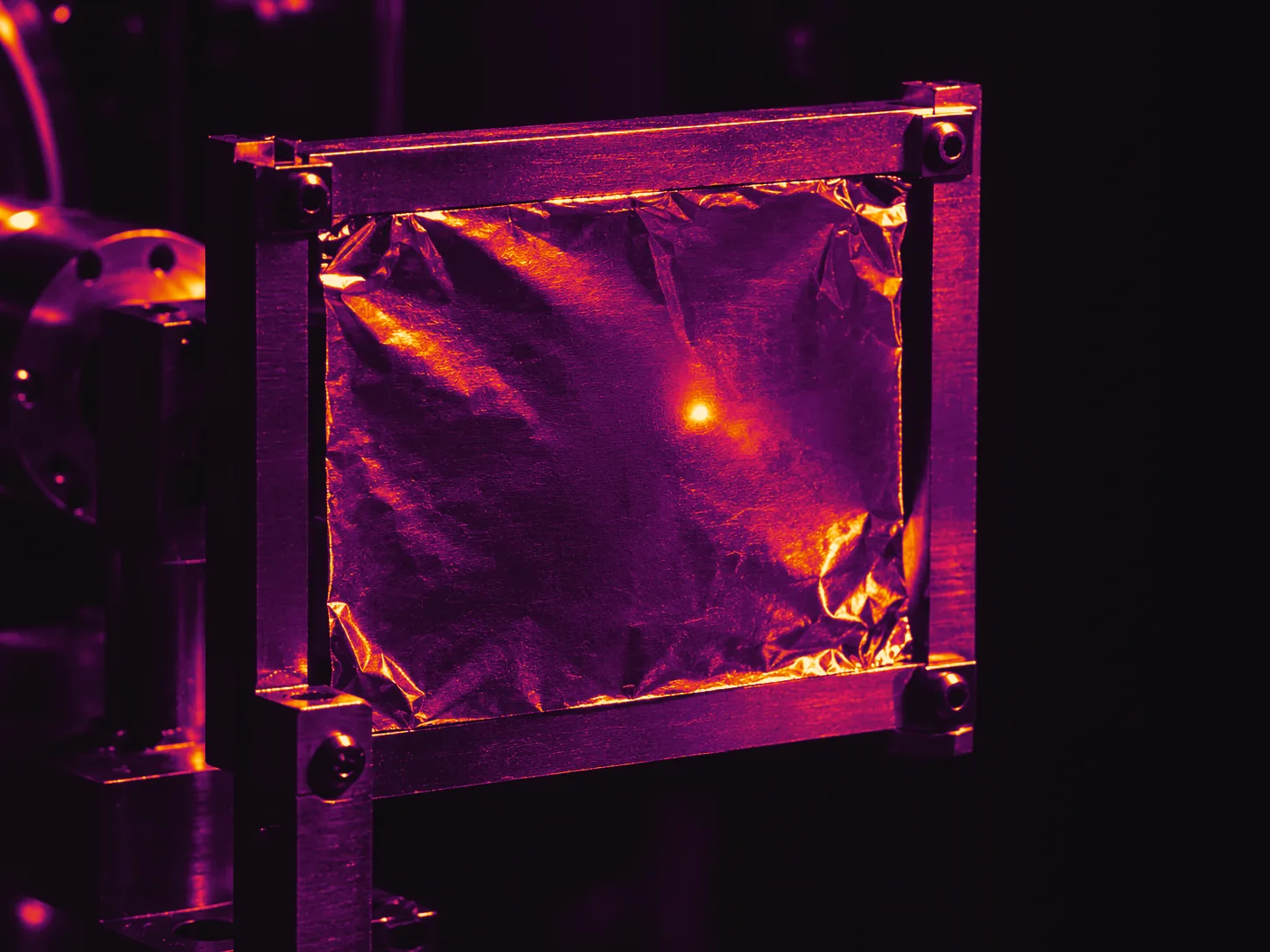
Illustrative photograph: a thin metal foil in a precise holder with a small bright impact spot[Illustrative image]

[ITS JOB IN THE DEVICE]

Hit the target. This cluster sets the target enhancement and the discriminating measurement.

Deuterons at 0.25 to 2.5 keV; a 3.02 MeV proton line tells the two readings apart See all 6 lessons ↓

records
3
years
2025–2026
papers cited
3
with a DOI
2

[3 OF 84 RECORDS · 1986 TO 2026]each bar opens its row

[WHAT WE CARRY INTO THE DEVICE]

What we carry
into the device.

The payoff of this record for the program: 6 design decisions, each tied to what was measured. They feed one input of the device.

[THE SIX DESIGN INPUTS]

  1. Shake it 0208
  2. Make the field 06
  3. Choose the host 04
  4. Load it, measure it 0103
  5. Multiply the rate 05
  6. Hit the target 07

Carry into device, in the full document

  1. 01

    Target deuteron energies of 0.25 to 2.5 keV at contact gaps

    This is exactly the range where the reported plateau and the about 3.0 keV effective screening potential were measured, and where our piezo-gap acceleration lands.

  2. 02

    Load the hydride phase electrochemically or gas-load ex-situ

    The Thunderbird record shows loading itself raises yield, so D/Pd loading ratio is a primary device parameter, not a fixed condition.

  3. 03

    Palladium first, titanium second

    Both appear in the Nature Communications record, and the screening analysis covers both; Pd carries the largest reported screening number.

  4. 04

    Design the experiment to discriminate the two interpretations

    Monoenergetic proton lines near 3.02 MeV would indicate discrete field-accelerated deuterons in the bulk, while a flat null would indicate the enhancement does not transfer off the beam platform.

  5. 05

    Because rates are reported as low even on the beam platform, budget long integration times and background-dominated statistics; the beam record still needed the dual-chamber precision that we must match with neutron time-of-flight plus CR-39.

  6. 06

    Treat the ion-track question as the central open physics point of the program

    A beam-off, mechanically excited hydride suspension is the cleanest available test of whether the plateau is a materials property or a track property.

[THE RECORD]

3 records,
2025 to 2026.

[HOW THIS RECORD WAS COMPILED]

Searched and confirmed 2026-10-21. This cluster is the quantitative center of gravity for the Vantasner device: a 2026 Nature Communications measurement reports D-D fusion yields in metal hydrides that stop falling with beam energy below about 2.5 keV, an enhancement of more than 10^18 over bare-nucleus rates, and an effective screening potential of keV scale. A companion record from the Szczecin group offers a rival interpretation confined to ion tracks, and the 2025 Thunderbird reactor record shows electrochemical loading raising fusion rates in a beam target.

[RAW TABLE] [IN THE FULL DOCUMENT →] Sorted by year. #N is the row number in the repo table.
  1. 2025–2026 #1

    M.E. Karahadian et al.

    UC Davis and Berkeley Lab

    Nature Communications 17, 8845 (2026) DOI ↗arXiv ↗Library →

    Setup
    Dual-chamber platform combining electrochemical deuterium loading with implanted deuteron beam bombardment of the loaded foil
    Reported
    Pronounced D-D fusion enhancement and a reaction-yield plateau below about 2.5 keV beam energy, contrary to expected exponential suppression; enhancement over 10^18 relative to theoretical bare-nucleus fusion rates; per the paper's analysis an effective screening potential rising to about 3.0 keV for palladium deuteride at 0.25 keV beam energy; the authors state reaction rates are low and frame the result as a materials-driven, reproducible, tunable regime
    Materials, loading, excitation, conditions for record 1
    Materials
    Palladium and titanium hydrides (Pd and Ti foils electrochemically loaded with deuterium)
    Loading
    Electrochemical D loading of Pd and Ti foils
    Excitation
    Implanted deuteron beams at sub-keV energies
    Conditions
    Room-temperature metallic foils, beam energies below 2.5 keV
    Who
    M.E. Karahadian, M. Colborne, A. Persaud, T. Schenkel, J.N. Munday (UC Davis and Berkeley Lab)
    When · venue
    Preprint December 2025; journal publication 18 July 2026 · Nature Communications 17, 8845 (2026); DOI 10.1038/s41467-026-74421-1; preprint arXiv:2512.06212
  2. 2025 #3

    K.-Y. Chen et al.

    University of British Columbia and Lawrence Berkeley National Laboratory

    Nature 644, 640-645 (2025) DOI ↗Library →

    Setup
    The Thunderbird Reactor: a custom benchtop particle accelerator combining plasma immersion ion implantation (PIII) of D+ with an electrochemically loaded palladium target
    Reported
    Electrochemical loading raises measured D-D fusion rates in the beam target relative to an unloaded target; the reactor is described as capable of detecting the relevant fusion products; the benchtop platform is publicly named the Thunderbird Reactor (UBC news release of 20 August 2025 and press coverage confirmed the name and the same paper)
    Materials, loading, excitation, conditions for record 3
    Materials
    Palladium target; electrolytic loading cell
    Loading
    Electrochemical loading of the palladium target with deuterium
    Excitation
    D+ plasma immersion ion implantation onto the loaded target
    Conditions
    Benchtop, room-temperature target
    Who
    K.-Y. Chen, J. Maiwald, P.A. Schauer, T. Schenkel, M. Stolar, A.K. Brown, C.P. Berlinguette et al. (University of British Columbia and Lawrence Berkeley National Laboratory)
    When · venue
    2025 · Nature 644, 640-645 (2025); DOI 10.1038/s41586-025-09042-7
  3. 2026 #2

    K. Czerski et al.

    University of Szczecin

    arXiv:2605.27438, "Thermal deuteron-deuteron fusion in metallic targets" arXiv ↗Library →

    Setup
    Beam-deuteron experiments on metallic deuterated targets, interpreted with a thermal-track model
    Reported
    The thermal-track interpretation: D-D fusion in metallic targets proceeds inside beam-generated ion tracks where transient heating and enhanced diffusion dominate; the yield plateau is an effect of the track environment rather than a static screening potential of the bulk material. The group's earlier companion record, "Observation of Thermal Deuteron-Deuteron Fusion in Ion Tracks", arXiv:2409.02112 (2024, revised December 2025), lays out the same mechanism
    Materials, loading, excitation, conditions for record 2
    Materials
    Metallic deuterated targets
    Loading
    Gas-loaded metallic targets
    Excitation
    Deuteron beam implantation
    Conditions
    Low beam energies
    Who
    K. Czerski, R. Dubey, G. Haridas Das, S. Thulichery, A. Kowalska, N. Targosz-Sleczka, M. Valat (University of Szczecin)
    When · venue
    2026 (submitted 22 May 2026) · arXiv:2605.27438, "Thermal deuteron-deuteron fusion in metallic targets" (no journal DOI confirmed as of 2026-10-21)
The record table exactly as written in the repo (3 rows × 9 columns; scrolls sideways)
WhoWhenVenue / DOISetupMaterialsLoadingExcitationConditionsReported outputs
M.E. Karahadian, M. Colborne, A. Persaud, T. Schenkel, J.N. Munday (UC Davis and Berkeley Lab)Preprint December 2025; journal publication 18 July 2026Nature Communications 17, 8845 (2026); DOI 10.1038/s41467-026-74421-1; preprint arXiv:2512.06212Dual-chamber platform combining electrochemical deuterium loading with implanted deuteron beam bombardment of the loaded foilPalladium and titanium hydrides (Pd and Ti foils electrochemically loaded with deuterium)Electrochemical D loading of Pd and Ti foilsImplanted deuteron beams at sub-keV energiesRoom-temperature metallic foils, beam energies below 2.5 keVPronounced D-D fusion enhancement and a reaction-yield plateau below about 2.5 keV beam energy, contrary to expected exponential suppression; enhancement over 10^18 relative to theoretical bare-nucleus fusion rates; per the paper's analysis an effective screening potential rising to about 3.0 keV for palladium deuteride at 0.25 keV beam energy; the authors state reaction rates are low and frame the result as a materials-driven, reproducible, tunable regime
K. Czerski, R. Dubey, G. Haridas Das, S. Thulichery, A. Kowalska, N. Targosz-Sleczka, M. Valat (University of Szczecin)2026 (submitted 22 May 2026)arXiv:2605.27438, "Thermal deuteron-deuteron fusion in metallic targets" (no journal DOI confirmed as of 2026-10-21)Beam-deuteron experiments on metallic deuterated targets, interpreted with a thermal-track modelMetallic deuterated targetsGas-loaded metallic targetsDeuteron beam implantationLow beam energiesThe thermal-track interpretation: D-D fusion in metallic targets proceeds inside beam-generated ion tracks where transient heating and enhanced diffusion dominate; the yield plateau is an effect of the track environment rather than a static screening potential of the bulk material. The group's earlier companion record, "Observation of Thermal Deuteron-Deuteron Fusion in Ion Tracks", arXiv:2409.02112 (2024, revised December 2025), lays out the same mechanism
K.-Y. Chen, J. Maiwald, P.A. Schauer, T. Schenkel, M. Stolar, A.K. Brown, C.P. Berlinguette et al. (University of British Columbia and Lawrence Berkeley National Laboratory)2025Nature 644, 640-645 (2025); DOI 10.1038/s41586-025-09042-7The Thunderbird Reactor: a custom benchtop particle accelerator combining plasma immersion ion implantation (PIII) of D+ with an electrochemically loaded palladium targetPalladium target; electrolytic loading cellElectrochemical loading of the palladium target with deuteriumD+ plasma immersion ion implantation onto the loaded targetBenchtop, room-temperature targetElectrochemical loading raises measured D-D fusion rates in the beam target relative to an unloaded target; the reactor is described as capable of detecting the relevant fusion products; the benchtop platform is publicly named the Thunderbird Reactor (UBC news release of 20 August 2025 and press coverage confirmed the name and the same paper)

[THE STORY OF THE RECORD]

How this line of work developed.

[TERMS IN THIS RECORD]

  • Deuterium
  • Deuteron
  • D-D fusion
  • Metal hydride
  • Deuteride
  • Piezoelectric
  • Screening potential
  • Yield plateau
Full glossary →

The Karahadian platform is the closest public analogue to a field-accelerated deuteron crossing a metal hydride: deuterons are pushed into electrochemically loaded Pd or Ti at beam energies from the sub-keV range upward, and the measured yield refuses to follow the exponential Gamow fall, forming a plateau below about 2.5 keV. The paper's analysis converts that plateau into an effective screening potential of keV scale, about 3.0 keV for palladium deuteride at 0.25 keV beam energy, and into a total enhancement exceeding 10^18 over bare-nucleus rates. That number is the load-bearing wall of the Vantasner concept: if an enhancement of that class applies to deuterons accelerated by piezoelectric contact fields (0.1 to 1 keV across nanometer gaps), fusion events in our suspension become observable; if it applies only inside beam-generated ion tracks, as the Szczecin thermal-track record argues, a mechanically excited hydride stays silent. The Thunderbird record adds the loading axis: in the 2025 Nature paper, electrochemical loading of the palladium target raises the fusion rate under identical beam conditions, showing that deuteron density in the metal is itself a control knob on yield. Our device runs the same three variables (deuteron energy from contact fields, deuteron density from hydride loading, and materials environment from the hydride lattice) and measures which of the two competing pictures survives when the beam is removed.
[THE PAPERS]

3 papers
behind it.

Every reference this cluster cites, and where to read it. DOI links go to the publisher; local PDFs appear here as the repository adds them.

  • 2 with a DOI
  • 2 on arXiv
  • 0 with a local PDF
  • 0 citation only
  1. 2025

    Chen, K.-Y., Maiwald, J., Schauer, P.A., Schenkel, T., Stolar, M., Brown, A.K., Berlinguette, C.P., and co-workers

    Electrochemical loading enhances deuterium fusion rates in a metal target

    (the Thunderbird reactor), Nature 644, 640-645. DOI 10.1038/s41586-025-09042-7.

    DOI ↗arXivPDF Library card →

    Also in 03 Excess-heat programs

  2. 2026

    Czerski, K., Dubey, R., Haridas Das, G., Thulichery, S., Kowalska, A., Targosz-Sleczka, N., Valat, M.

    Thermal deuteron-deuteron fusion in metallic targets

    (the thermal-track interpretation; companion preprint arXiv:2409.02112, 2024), arXiv:2605.27438 (no journal DOI as of 2026-10-21).

    DOIarXiv ↗PDF Library card →

  3. 2026

    Karahadian, M.E., Colborne, M., Persaud, A., Schenkel, T., Munday, J.N., and co-workers

    Enhanced nuclear fusion in the sub-keV energy regime

    (the sub-keV yield plateau; preprint arXiv:2512.06212, December 2025), Nature Communications 17, 8845. DOI 10.1038/s41467-026-74421-1.

    DOI ↗arXiv ↗PDF Library card →