[08/08] EVIDENCE CLUSTER · EXCITATION

Piezonuclear and fracto‑fusion records

Fracture and impact as transient deuteron sources: burst kinetics and the detector conditions used when this was tested.

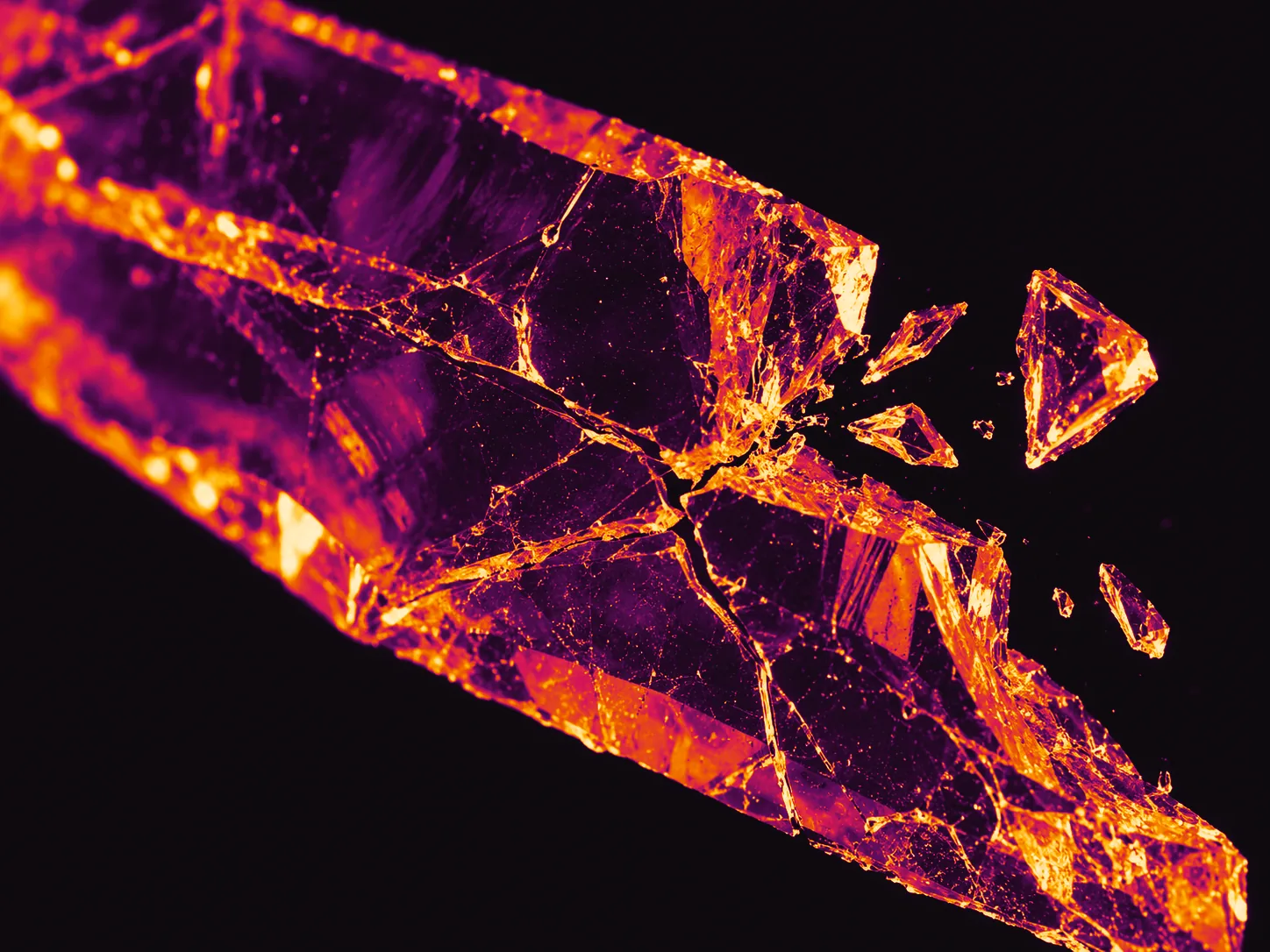
Illustrative photograph: a branching crystal fracture with sharp fragments frozen in mid-air[Illustrative image]

[ITS JOB IN THE DEVICE]

Shake it. This cluster sets the mechanical excitation routes.

20 kHz-class ultrasound drives the suspension; counting is locked to the bursts See all 6 lessons ↓

records
6
years
1986–2024
papers cited
7
with a DOI
4

[6 OF 84 RECORDS · 1986 TO 2026]each bar opens its row

[WHAT WE CARRY INTO THE DEVICE]

What we carry
into the device.

The payoff of this record for the program: 6 design decisions, each tied to what was measured. They feed one input of the device.

[THE SIX DESIGN INPUTS]

  1. Shake it 0208
  2. Make the field 06
  3. Choose the host 04
  4. Load it, measure it 0103
  5. Multiply the rate 05
  6. Hit the target 07

Carry into device, in the full document

  1. 01

    Burst kinetics

    Every record in this cluster shows emission tied to transient mechanical events (cracks, jets, shockwave interference peaks), not steady state; design the device and the analysis for burst-locked counting synchronized to the 20 kHz drive duty cycle.

  2. 02

    Detector conditions that carried results

    He-3 proportional counters with confirmed thermal spectral shape, long simultaneous background runs, physical isolation from electromagnetic pickup (grounded copper shielding between driver and detectors in the 2024 record), and borax castles for sub-CPM backgrounds; adopt the same stack plus EJ-309 time-of-flight.

  3. 03

    The dose-response control is the sharpest lesson of the cluster

    The 2024 record saw no excess from D2 bubbles or D2O droplets and saw flux only with Ti/D powder present, so our controls must hold the hydride out while everything else stays in.

  4. 04

    Fractoemission of charged particles and light from cracking grains is a standing background for any fracture-dominated excitation; CR-39 masked-pair foils inside the cell separate particle tracks from photons and noise.

  5. 05

    Pressure-peak coincidence

    In the 2024 record neutrons appeared only when constructive-interference pressure peaks of a few thousand psi registered; our force-chain contact stress (estimated 0.1 to 1 GPa) sits in the same class, so peak stress amplitude is a primary knob to scan.

  6. 06

    Deuterium supply through the solid phase (TiD, PdD) rather than through gas bubbles is what the strongest cavitation record points to; this favors loading the grains ex-situ in deuterium gas rather than relying on dissolved D2O.

[THE RECORD]

6 records,
1986 to 2024.

[HOW THIS RECORD WAS COMPILED]

Searched and confirmed 2026-10-21. This cluster covers neutron and charged-particle emission reports tied to mechanical fracture, impact and cavitation of deuterated solids. The design question for the Vantasner device is narrow and mechanical: fracture and impact act as transient deuteron sources with burst kinetics, and the literature tells us which detector conditions and controls were used when that was tested.

[RAW TABLE] [IN THE FULL DOCUMENT →] Sorted by year. #N is the row number in the repo table.
  1. 1986 #2

    V.A. Klyuev et al.

    Sov. Tech. Phys. Lett. 12, 1333 no DOILibrary →

    Setup
    Fracture experiments on deuterated solids with neutron detection
    Reported
    Reported neutron emission coincident with fracture of deuterated materials
    Materials, loading, excitation, conditions for record 2
    Materials
    Heavy ice, lithium deuteride
    Loading
    Deuterated solids
    Excitation
    Mechanical fracture
    Conditions
    Room temperature
    Who
    V.A. Klyuev et al.
    When · venue
    1986 · Sov. Tech. Phys. Lett. 12, 1333 (venue and year only; no DOI confirmed; established via citation within the 1989 Nature paper)
  2. 1989 #1

    B.V. Derjaguin et al.

    Institute of Physical Chemistry, USSR Academy of Sciences

    Nature 341, 492 DOI ↗Library →

    Setup
    Mechanical fracture experiments with neutron and charged-particle detection around the cracking specimen
    Reported
    Reported neutron emission coincident with titanium fracture; the group's earlier 1986 companion reported neutron emission from fracture of heavy ice and lithium deuteride
    Materials, loading, excitation, conditions for record 1
    Materials
    Titanium (deuterated); the group's 1986 line began with heavy ice and lithium deuteride
    Loading
    Deuterated titanium specimens
    Excitation
    Mechanical fracture (cracking of loaded specimens)
    Conditions
    Room temperature, detectors surrounding the fracture zone
    Who
    B.V. Derjaguin, A.G. Lipson, V.A. Kluev, D.M. Sakov, Yu.P. Toporov (Institute of Physical Chemistry, USSR Academy of Sciences)
    When · venue
    1989 · Nature 341, 492; DOI 10.1038/341492a0, title "Titanium fracture yields neutrons?" (framed as a question by the authors)
  3. 1990 #3

    A.G. Lipson et al.

    Journal article indexed in the IAEA INIS database under "Fracto-emission from deuterated titanium: Supporting evidence for a fracto-fusion mechanism" no DOILibrary →

    Setup
    Fracto-emission measurements from deuterated titanium, recording charged-particle and photon emission from newly formed crack surfaces
    Reported
    Reported fracto-emission (charged-particle and light emission) from deuterated titanium, presented as supporting the fracto-fusion mechanism; the record also documents that fracture of dielectrics is a known charged-particle and light source in its own right
    Materials, loading, excitation, conditions for record 3
    Materials
    Deuterated titanium
    Loading
    Deuterium-loaded titanium
    Excitation
    Mechanical fracture
    Conditions
    Vacuum
    Who
    A.G. Lipson and co-workers
    When · venue
    1990 · Journal article indexed in the IAEA INIS database under "Fracto-emission from deuterated titanium: Supporting evidence for a fracto-fusion mechanism" (record RBXE4-ER508, January 1990; full journal metadata not independently confirmed)
  4. 2009 #6

    A. Carpinteri et al.

    Politecnico di Torino

    Strain 45, 332-339 DOI ↗Library →

    Setup
    Mechanical compression tests to brittle fracture of rock specimens with neutron detection (He-3 and bubble detectors)
    Reported
    Reported neutron emission above background during brittle fracture of granite; the same group later reported associated chemical-change interpretations; a same-journal comment by U. Bardi and G. Comoretto (Strain 49, 544, 2013; DOI 10.1111/str.12036) addresses the geomechanical interpretation records
    Materials, loading, excitation, conditions for record 6
    Materials
    Granite and other brittle rock specimens
    Loading
    Natural (no deuterium loading)
    Excitation
    Compression to brittle fracture
    Conditions
    Laboratory compression frames
    Who
    A. Carpinteri, F. Cardone, G. Lacidogna (Politecnico di Torino)
    When · venue
    2009 · Strain 45, 332-339; DOI 10.1111/j.1475-1305.2008.00615.x
  5. 2024 #5

    M. Fomitchev-Zamilov

    Maximus Energy Corporation

    Scientific Reports 14, 11517 DOI ↗DOI ↗Library →

    Setup
    20 kHz piezoelectric sonifier-driven reactor (6 inch conflat tee, 550 W Branson driver) with deuterated titanium powder (electrochemically loaded from 500 mesh Ti, 0.05 M boric acid in D2O, 2.5 V, 80 h) suspended in degassed mineral oil; bank of He-3 proportional counters plus NaI(Tl) gamma detector; borax castle for background suppression
    Reported
    Reported neutron count rates exceeding 6500 CPM at peak (background below 0.5 CPM), stated as more than 10,000 times background; runs sustained up to 1.5 hours and repeated over 6 months; clean thermal neutron spectrum recorded; no excess from D2 bubbles or D2O droplets without Ti/D powder; the author states spallation and other neutron sources still need to be ruled out
    Materials, loading, excitation, conditions for record 5
    Materials
    Deuterated titanium powder in mineral oil with D2O microemulsion
    Loading
    Ti/D electrochemically loaded; suspension of a few hundred milligrams Ti/D per run, plus about 1 mL D2O
    Excitation
    20 kHz acoustic drive at maximum power, 0.01 s on / 0.01 s off duty cycle; neutron flux present only when massive acoustic peaks of a few thousand psi registered from constructive interference of bubble shockwaves
    Conditions
    Ambient pressure, degassed oil; stable suspension for at least 6 months
    Who
    M. Fomitchev-Zamilov (Maximus Energy Corporation)
    When · venue
    2024 · Scientific Reports 14, 11517; DOI 10.1038/s41598-024-62055-6 (erratum: Scientific Reports 14, 16669, DOI 10.1038/s41598-024-67868-z)
  6. n.d. #4

    A.G. Lipson et al.

    University of Illinois at Urbana-Champaign

    Review manuscript "Phenomenon of energetic charged particle emission from hydrogen/deuterium loaded metals", copy hosted at lenr-canr.org no DOILibrary →

    Setup
    Survey of charged-particle emission experiments across hydrogen- and deuterium-loaded metals including fracture and cavitation geometries
    Reported
    Reports of energetic charged-particle emission from loaded metals, with CR-39 track-detector methodology prominent; carries the parameter lessons on detector placement and etching protocols
    Materials, loading, excitation, conditions for record 4
    Materials
    Various deuterated metals (Ti, Pd)
    Loading
    Gas and electrochemical loading
    Excitation
    Mechanical and cavitation excitation
    Conditions
    Various
    Who
    A.G. Lipson, G.H. Miley (University of Illinois at Urbana-Champaign)
    When · venue
    Year not independently confirmed · Review manuscript "Phenomenon of energetic charged particle emission from hydrogen/deuterium loaded metals", copy hosted at lenr-canr.org (venue and year not confirmed; author list confirmed from the manuscript)
The record table exactly as written in the repo (6 rows × 9 columns; scrolls sideways)
WhoWhenVenue / DOISetupMaterialsLoadingExcitationConditionsReported outputs
B.V. Derjaguin, A.G. Lipson, V.A. Kluev, D.M. Sakov, Yu.P. Toporov (Institute of Physical Chemistry, USSR Academy of Sciences)1989Nature 341, 492; DOI 10.1038/341492a0, title "Titanium fracture yields neutrons?" (framed as a question by the authors)Mechanical fracture experiments with neutron and charged-particle detection around the cracking specimenTitanium (deuterated); the group's 1986 line began with heavy ice and lithium deuterideDeuterated titanium specimensMechanical fracture (cracking of loaded specimens)Room temperature, detectors surrounding the fracture zoneReported neutron emission coincident with titanium fracture; the group's earlier 1986 companion reported neutron emission from fracture of heavy ice and lithium deuteride
V.A. Klyuev et al.1986Sov. Tech. Phys. Lett. 12, 1333 (venue and year only; no DOI confirmed; established via citation within the 1989 Nature paper)Fracture experiments on deuterated solids with neutron detectionHeavy ice, lithium deuterideDeuterated solidsMechanical fractureRoom temperatureReported neutron emission coincident with fracture of deuterated materials
A.G. Lipson and co-workers1990Journal article indexed in the IAEA INIS database under "Fracto-emission from deuterated titanium: Supporting evidence for a fracto-fusion mechanism" (record RBXE4-ER508, January 1990; full journal metadata not independently confirmed)Fracto-emission measurements from deuterated titanium, recording charged-particle and photon emission from newly formed crack surfacesDeuterated titaniumDeuterium-loaded titaniumMechanical fractureVacuumReported fracto-emission (charged-particle and light emission) from deuterated titanium, presented as supporting the fracto-fusion mechanism; the record also documents that fracture of dielectrics is a known charged-particle and light source in its own right
A.G. Lipson, G.H. Miley (University of Illinois at Urbana-Champaign)Year not independently confirmedReview manuscript "Phenomenon of energetic charged particle emission from hydrogen/deuterium loaded metals", copy hosted at lenr-canr.org (venue and year not confirmed; author list confirmed from the manuscript)Survey of charged-particle emission experiments across hydrogen- and deuterium-loaded metals including fracture and cavitation geometriesVarious deuterated metals (Ti, Pd)Gas and electrochemical loadingMechanical and cavitation excitationVariousReports of energetic charged-particle emission from loaded metals, with CR-39 track-detector methodology prominent; carries the parameter lessons on detector placement and etching protocols
M. Fomitchev-Zamilov (Maximus Energy Corporation)2024Scientific Reports 14, 11517; DOI 10.1038/s41598-024-62055-6 (erratum: Scientific Reports 14, 16669, DOI 10.1038/s41598-024-67868-z)20 kHz piezoelectric sonifier-driven reactor (6 inch conflat tee, 550 W Branson driver) with deuterated titanium powder (electrochemically loaded from 500 mesh Ti, 0.05 M boric acid in D2O, 2.5 V, 80 h) suspended in degassed mineral oil; bank of He-3 proportional counters plus NaI(Tl) gamma detector; borax castle for background suppressionDeuterated titanium powder in mineral oil with D2O microemulsionTi/D electrochemically loaded; suspension of a few hundred milligrams Ti/D per run, plus about 1 mL D2O20 kHz acoustic drive at maximum power, 0.01 s on / 0.01 s off duty cycle; neutron flux present only when massive acoustic peaks of a few thousand psi registered from constructive interference of bubble shockwavesAmbient pressure, degassed oil; stable suspension for at least 6 monthsReported neutron count rates exceeding 6500 CPM at peak (background below 0.5 CPM), stated as more than 10,000 times background; runs sustained up to 1.5 hours and repeated over 6 months; clean thermal neutron spectrum recorded; no excess from D2 bubbles or D2O droplets without Ti/D powder; the author states spallation and other neutron sources still need to be ruled out
A. Carpinteri, F. Cardone, G. Lacidogna (Politecnico di Torino)2009Strain 45, 332-339; DOI 10.1111/j.1475-1305.2008.00615.xMechanical compression tests to brittle fracture of rock specimens with neutron detection (He-3 and bubble detectors)Granite and other brittle rock specimensNatural (no deuterium loading)Compression to brittle fractureLaboratory compression framesReported neutron emission above background during brittle fracture of granite; the same group later reported associated chemical-change interpretations; a same-journal comment by U. Bardi and G. Comoretto (Strain 49, 544, 2013; DOI 10.1111/str.12036) addresses the geomechanical interpretation records

[THE STORY OF THE RECORD]

How this line of work developed.

[TERMS IN THIS RECORD]

  • Deuterium
  • Deuteron
  • Deuteride
  • Piezoelectric
  • Cavitation
  • CR-39
Full glossary →

The record begins in the Soviet fracture laboratories: Klyuev and co-workers reported in 1986 neutron emission from cracking deuterated heavy ice and lithium deuteride, and the Derjaguin group followed in 1989 with the Nature paper that put the question in its title: titanium fracture yields neutrons? The 1990 Lipson fracto-emission record documents the competing origin that any fracture experiment must manage, namely that crack formation itself emits charged particles and light regardless of deuterium. The Carpinteri, Cardone and Lacidogna compression tests on granite extended piezonuclear reports into rock mechanics, with emissions near background levels and thin detector statistics, and same-journal commentary addressing the chemical interpretation. The 2024 Scientific Reports cavitation record is the most instrumented modern entry: it reports no excess without the deuterated titanium powder, a dose-response to the presence of Ti/D, coincidence of neutron flux with extreme acoustic pressure peaks, and thermal-neutron spectral shape, while stating openly that spallation and other sources remain to be excluded. Across the cluster the mechanism carried into the Vantasner device is mechanical: fracture surfaces, impinging jets and contact impacts act as transient, bursting deuteron sources with localized pressure and charge concentrations, which is the same physics our shear-thickening hydride suspension drives at 20 kHz.

[THE PAPERS]

7 papers
behind it.

Every reference this cluster cites, and where to read it. DOI links go to the publisher; local PDFs appear here as the repository adds them.

  • 4 with a DOI
  • 0 on arXiv
  • 0 with a local PDF
  • 3 citation only
  1. 1986

    Klyuev, V.A., and co-workers

    [DESCRIBED] Neutron emission from fracture of deuterated heavy ice and lithium deuteride, Soviet Technical Physics Letters 12, 1333 (venue and year only; established via citation within the 1989 Nature paper).

    DOIarXivPDF Library card →

  2. 1989

    Derjaguin, B.V., Lipson, A.G., Kluev, V.A., Sakov, D.M., Toporov, Yu.P.

    Titanium fracture yields neutrons?

    Nature 341, 492. DOI 10.1038/341492a0.

    DOI ↗arXivPDF Library card →

  3. 1990

    Lipson, A.G., and co-workers

    Fracto-emission from deuterated titanium: Supporting evidence for a fracto-fusion mechanism

    IAEA INIS record RBXE4-ER508, January 1990 (full journal metadata not confirmed in the source cluster).

    DOIarXivPDF Library card →

  4. 2009

    Carpinteri, A., Cardone, F., Lacidogna, G.

    Piezonuclear Neutrons From Brittle Fracture: Early Results of Mechanical Compression Tests

    Strain 45, 332-339. DOI 10.1111/j.1475-1305.2008.00615.x.

    DOI ↗arXivPDF Library card →

  5. 2013

    Bardi, U., Comoretto, G.

    [DESCRIBED] Comment on the geomechanical piezonuclear interpretation records, Strain 49, 544-547. DOI 10.1111/str.12036.

    DOI ↗arXivPDF Library card →

  6. 2024

    Fomitchev-Zamilov, M.

    [DESCRIBED] Deuterated titanium powder in mineral oil under 20 kHz sonification with helium-3 and NaI(Tl) records, Scientific Reports 14, 11517; erratum, Scientific Reports 14, 16669. DOI 10.1038/s41598-024-62055-6 and DOI 10.1038/s41598-024-67868-z.

    DOI ↗arXivPDF Library card →

  7. n.d.

    Lipson, A.G., Miley, G.H. (undated manuscript). "Phenomenon of energetic charged

    Phenomenon of energetic charged particle emission from hydrogen/deuterium loaded metals

    Lipson, A.G., Miley, G.H. (undated manuscript). "Phenomenon of energetic charged particle emission from hydrogen/deuterium loaded metals", review manuscript hosted at lenr-canr.org (venue and year not confirmed in the source cluster).

    DOIarXivPDF Library card →